ⓒKorea Tourism Organization - Han Geonwoo
You land at Incheon, clear immigration in under 40 minutes, and suddenly you’re on the AREX express train watching apartment towers blur past rice paddies. Seoul starts before you even reach the city. That first hour sets the tone: this place is fast, organized, and completely unlike anywhere you’ve been before. The question isn’t whether Seoul is worth visiting — it absolutely is — but whether you’ll spend your limited days doing things that matter or wasting afternoons in tourist traps. This guide cuts straight to what works.
Entry Requirements and Getting a SIM
As of 2026, citizens of many Western countries — including the US, UK, Canada, and EU nations — can enter South Korea visa-free for stays up to 90 days, but you’ll need to register for a K-ETA (Korea Electronic Travel Authorization) before boarding your flight. The application costs around 10,000 KRW (roughly $7 USD) and takes 72 hours to process, sometimes faster. Do it at least a week before travel. Citizens of some nationalities still require a full visa — check the Korean Immigration Service website for your passport. [apply for K-ETA online] before you book anything else.
At Incheon Airport, pick up a T-money card (public transit card, 4,000 KRW / ~$3) from any convenience store in the arrivals hall. Load it with 30,000–50,000 KRW to start. For mobile data, the KT, SK Telecom, and LG U+ booths in arrivals all sell tourist SIMs from around 15,000 KRW (~$11) for 10 days of data. Alternatively, [get Korea eSIM on Airalo] before departure and activate it the moment you land — no queue, no counter, no problem.
Getting Into the City from Incheon
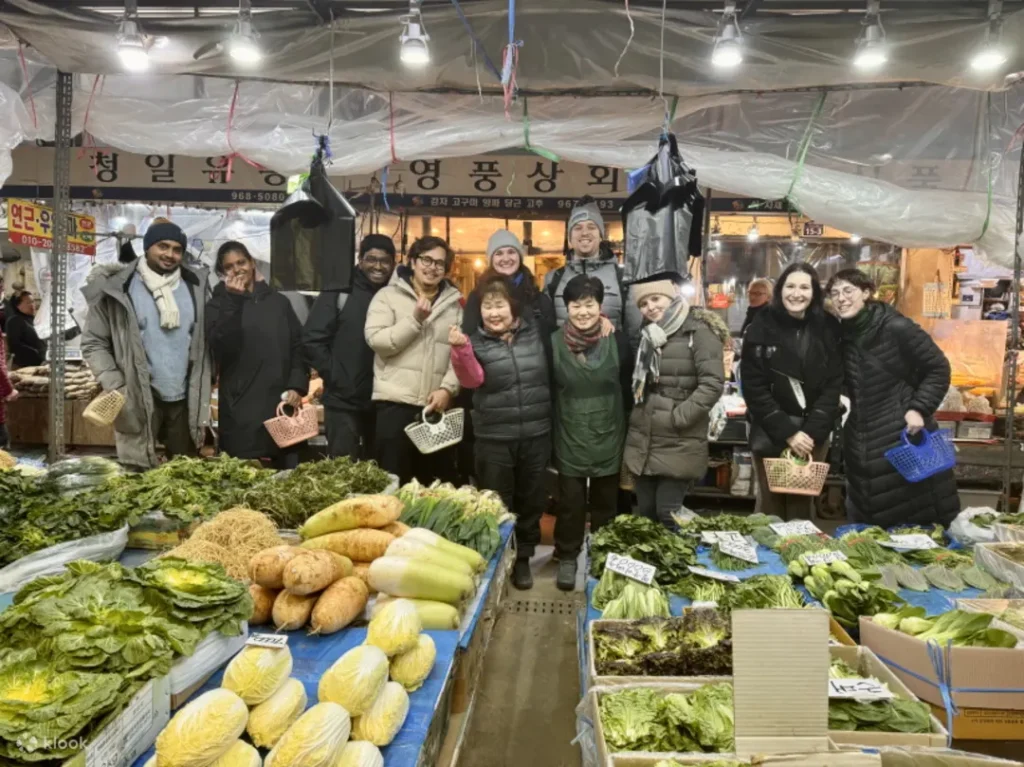
Korean Cooking Class with Gyeongdong Market Tour — OME Cooking Lab
- Gyeongdong Market tour — Korea's largest ingredient market
- Shop seasonal ingredients with the chef
- Cook 3 seasonal Korean home-meal dishes
The AREX All-Stop train (not the express) costs 4,150 KRW (~$3) from Incheon T1 to Seoul Station and takes about 66 minutes. Pay with your T-money card. The express runs in 43 minutes but costs 11,000 KRW (~$8) — skip it unless someone else is paying. From Seoul Station, you connect to Lines 1, 4, and the KTX intercity rail, putting almost every neighborhood within 30 minutes. Taxis from the airport to central Seoul run 65,000–90,000 KRW (~$47–65) depending on traffic and destination, which is reasonable if you’re splitting with a travel companion and carrying heavy luggage.
Where to Stay: Neighborhoods That Actually Make Sense
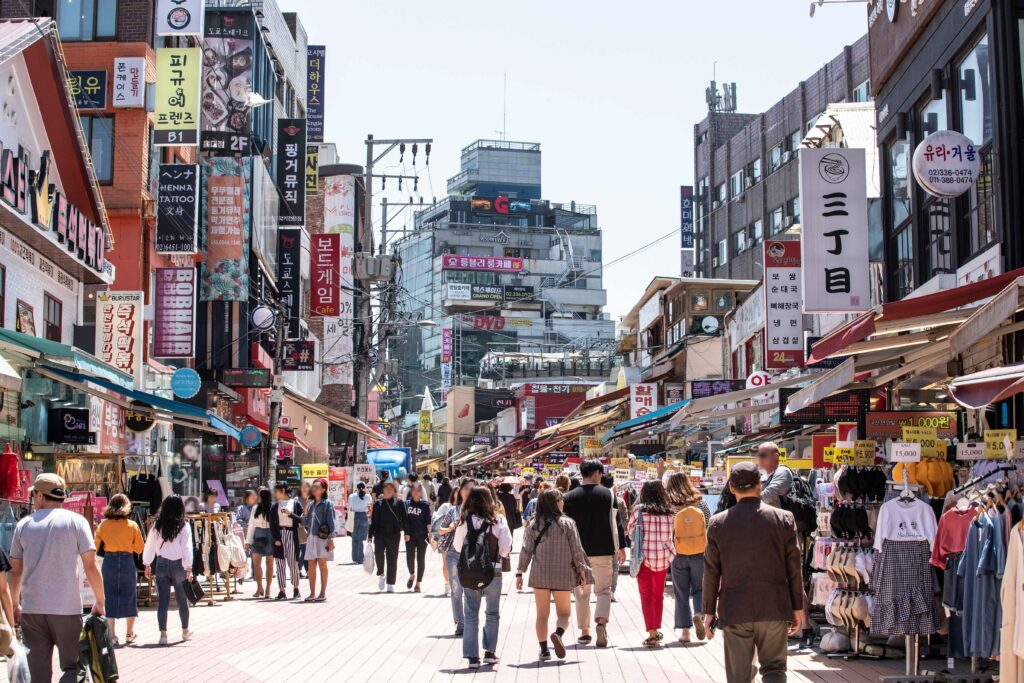
Most first-timers default to Myeongdong, and while the location near Line 4 is convenient, you’ll pay premium prices to sleep above a street of cosmetics shops that closes by 11pm. A smarter base: Hongdae (Hongik University Station, Lines 2/A’REX/Gyeongui-Jungang) puts you in a 24-hour neighborhood with excellent food, nightlife, and direct airport rail access. Insadong / Jongno-gu suits travelers who want proximity to palaces, the Cheonggyecheon stream, and traditional culture without sacrificing transport links. Itaewon (Line 6, Exit 1) is the most foreigner-comfortable area with diverse restaurants, but it’s slightly less central. Mid-range hotels in Hongdae run 80,000–150,000 KRW per night (~$58–110); budget guesthouses start around 35,000 KRW ($25). [check availability on Agoda] to compare your dates — Seoul hotel prices spike dramatically during Cherry Blossom season (late March to mid-April) and the Lotus Lantern Festival period in May.
Getting Around Seoul
The subway is the answer to almost every transport question. Seoul’s metro has 23 lines, covers over 300 stations, runs from roughly 5:30am to midnight, and costs 1,400–1,600 KRW (about $1–1.15) per journey with a T-money card. Google Maps and Naver Maps both give accurate Seoul transit directions in English — use either one confidently. Kakao Maps is what locals actually use and has an English mode worth switching on.
Buses fill gaps the subway doesn’t reach and use the same T-money payment system. The only real navigation challenge is that bus stop announcements are in Korean — have your destination written in Korean characters on your phone to match what you see on stop signs. Taxis are metered, generally honest, and cheap by international standards: most in-city rides come in under 10,000 KRW ($7). Use the Kakao T app to hail one and avoid any ambiguity about the route.
The Neighborhoods Worth Your Time
Bukchon Hanok Village is not overrated — it’s just better on a Tuesday morning at 8am than on a Saturday afternoon when tour groups block every alley. The village sits between Gyeongbokgung and Changdeokgung palaces on the northern side of the city (Anguk Station, Line 3, Exit 2). Walk uphill from the main road to find the quieter alleys around Gahoe-dong. Entry to the village itself is free; Gyeongbokgung Palace costs 3,000 KRW (~$2.20) for adults.
Hongdae is primarily a nightlife and indie music area. The street art and free performances near Hongik University’s main gate are best on weekend evenings. Eating here is excellent and cheap — a bowl of decent dakgalbi (spicy stir-fried chicken) costs 12,000–15,000 KRW (~$9–11).
Insadong sells traditional crafts, tea, and street snacks along a pedestrianized main road (Anguk or Jonggak Station, Line 3). The Ssamziegil courtyard mall embedded inside the street is worth the 10 minutes it takes to explore. Skip the main tourist snack stalls and find the tiny tea houses tucked into the alleys running perpendicular to the main drag.
Seongsu-dong (Seongsu Station, Line 2, Exit 3) is where Seoul’s design and food scene lives right now. Former factories converted into cafés and concept stores, without the prices of Gangnam. The flat white culture here is serious — Daelim Warehouse and Blue Bottle both have outposts worth a stop.
Gangnam (specifically Apgujeong and Garosu-gil) is for high-end shopping and seeing the city’s wealthier face. COEX Mall underground complex (Samseong Station, Line 2) contains a decent aquarium and the famous Starfield Library, which photographs well and is free to enter.
Food: What to Eat and Where
Seoul’s street food is legitimately one of the best things about the city. Gwangjang Market (Jongno 5-ga Station, Line 1) is the real-deal indoor market that’s been operating since 1905. Eat bindaetteok (mung bean pancakes, around 4,000 KRW / $3) and mayak gimbap (addictive mini seaweed rice rolls, 3,000 KRW / $2.20) at the market stalls. Avoid the sections catering exclusively to large tour groups — walk toward the fabric vendors and find stalls with Korean grandmothers doing the cooking.
For samgyeopsal (grilled pork belly), Mapo-gu near Mapo Station (Line 5) has a dense concentration of restaurants that serve it properly. Budget 15,000–25,000 KRW (~$11–18) per person including soju and side dishes. Delivery apps like Baemin and Coupang Eats work with overseas cards now if your accommodation has a proper address.
Events in 2026 Worth Timing Your Trip Around
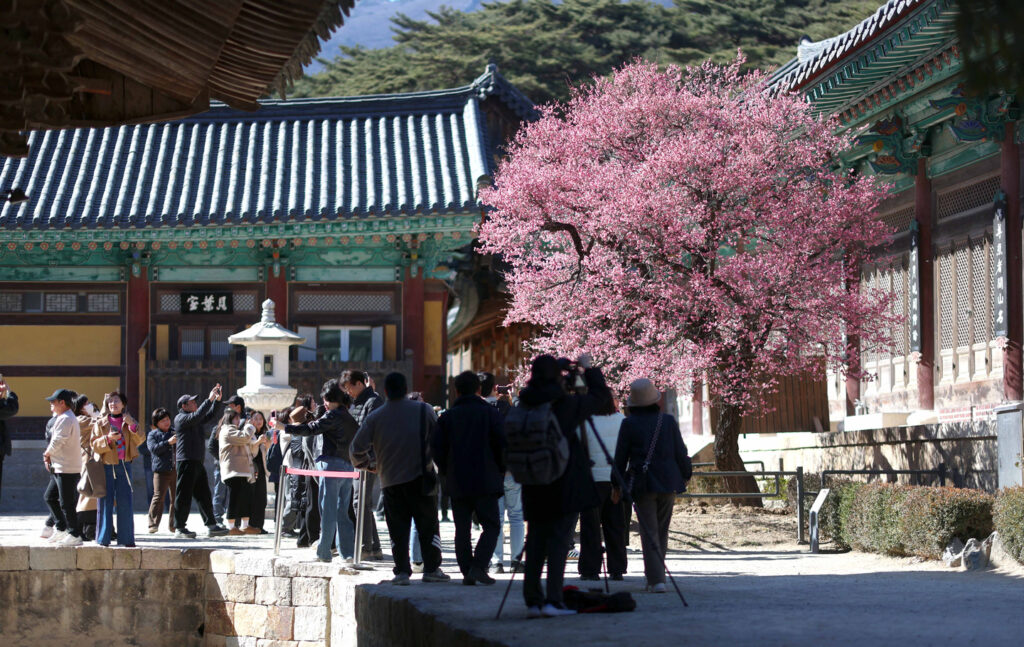
The Yeon Deung Hoe (Lotus Lantern Festival) typically falls in May around Buddha’s Birthday. In 2026 the celebrations extend across Seoul, Busan, Jeonju, and Gyeongju. In Seoul, the main lantern parade runs along Jongno and through Jogyesa Temple area — it’s free to watch and one of the most photographed events in the Korean calendar. Book accommodation for that weekend at least 3 months in advance and [compare hotel prices] early because rooms near Jongno sell out completely.
Practical Information
- Getting there: AREX All-Stop train from Incheon Airport T1 to Seoul Station, Line 1/4 connection. 66 minutes, 4,150 KRW (~$3) with T-money card.
- Hours: Subway runs approximately 5:30am–midnight daily. Gyeongbokgung Palace closes Tuesdays — verify before visiting. Most restaurants open 11am–10pm; many Hongdae spots open until 2–4am.
- Cost: Budget travelers can manage on 60,000–80,000 KRW/day (~$44–58) covering a guesthouse, street food, and transit. Mid-range comfort runs 150,000–250,000 KRW/day (~$110–180).
- Best time: Late September to November for autumn foliage and stable weather. Late March to mid-April for cherry blossoms (book early). Avoid late July to August if you hate humidity above 80%.
- Insider tip: Load the KakaoTalk app before you arrive and get a free number — most Korean businesses, guesthouses, and tour operators will respond faster on KakaoTalk than email, and it works on WiFi alone.
Seoul earns every hour of a first-timer’s time: the infrastructure is so good and the food so relentlessly excellent that even a poorly planned trip tends to work out — but a well-planned one will make you book the return flight before you’ve left.