ⓒKorea Tourism Organization - Lee Bumsu
A first-timer books a hotel near Gangnam because they know the song, ends up spending 40 minutes commuting to every palace and market they want to see, and wonders why Seoul feels exhausting. Neighborhood choice in this city matters more than in almost any other destination — Seoul’s subway is excellent but it’s also enormous, and the four areas visitors hear about most are genuinely different places serving different travelers.
Hongdae: The Right Base for Most First-Timers
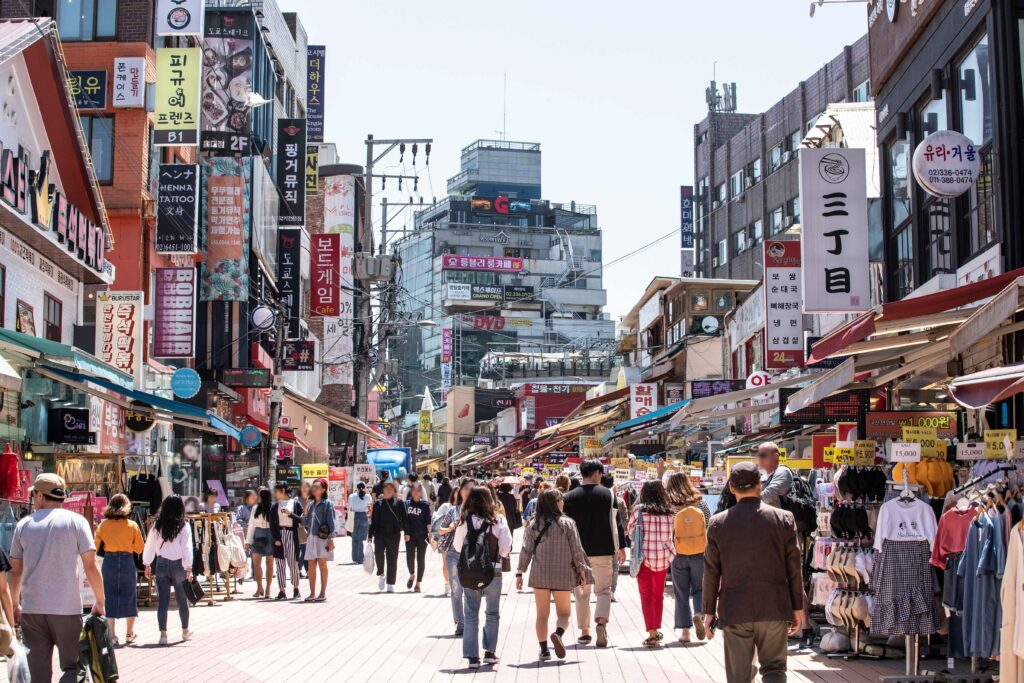
Hongdae sits on Line 2 (green) and the Airport Railroad, which means you’re 43 minutes from Incheon Airport on a direct train (₩9,500 / ~$7) and one transfer away from nearly everything worth seeing. The neighborhood runs on a university crowd — Hongik University is right there — so late-night convenience stores, 24-hour restaurants, and cheap eats are everywhere. Expect to pay ₩8,000–12,000 ($6–9) for a solid jjigae meal within a five-minute walk of the main strip.
The standard traveler complaint is noise. If your hotel is within three blocks of Hongik University Station exit 9, weekends get loud past midnight. Book somewhere one neighborhood deeper — Sangsu or Hapjeong — and you get the same access with actual sleep. Klook runs a popular K-pop studio experience launching from here if that’s on your list; [book on Klook] before it sells out on weekends.
Itaewon: More Complicated Than It Used to Be

Seoul Changgyeong Palace Night Tour & Street Food Experience
- Changgyeonggung Palace lit under the stars
- 11+ authentic Korean dishes at Gwangjang Market
- Taste live octopus (sannakji) — if you dare
Itaewon (Line 6, Itaewon Station) built its reputation as Seoul’s international district — foreign restaurants, English-speaking bars, a mosque, a sizable expat community. That identity is still real but the neighborhood is in a slow identity shift following the 2022 tragedy. The southern end near Noksapyeong Station has quietly become one of the best eating corridors in Seoul, with natural wine bars, serious Italian spots, and Korean-Mexican fusion sitting alongside 20-year-old kebab shops.
Itaewon makes sense as a base if you’re not traveling solo, want Western food options regularly, and are staying more than five days. It’s one stop from Samgakji (Line 4 and 6 interchange) which puts you on a direct line to Gyeongbokgung Palace. Accommodation here runs slightly cheaper than Myeongdong for equivalent quality — [compare hotel prices] before assuming Itaewon is budget territory, because the better guesthouses know their location value.
Gangnam: For Business Travelers and K-Drama Completionists
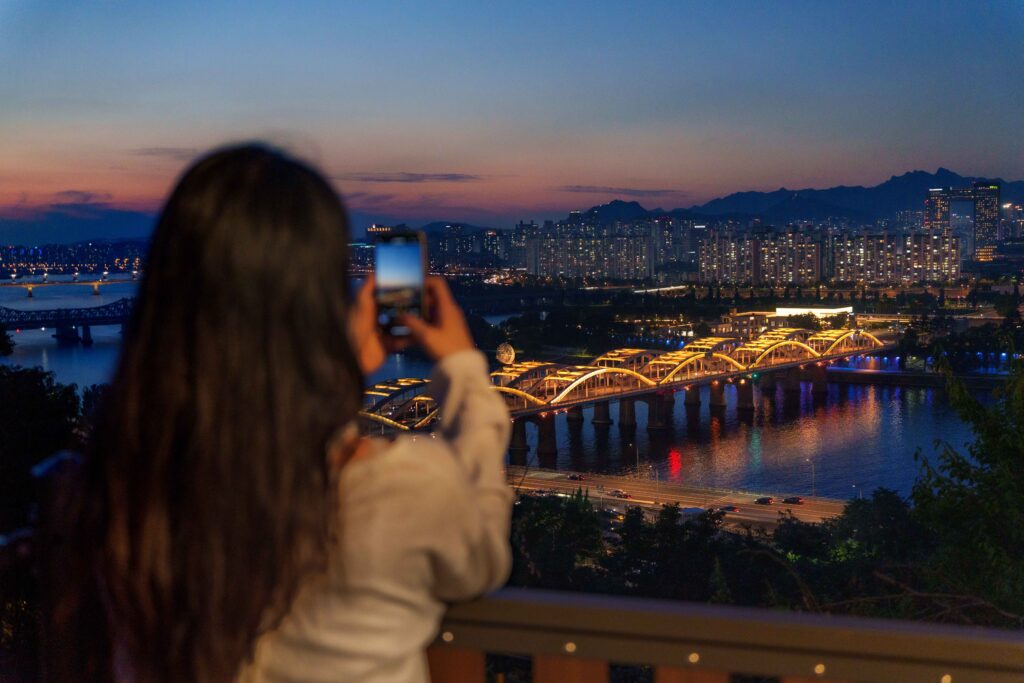
South of the Han River, Gangnam (Line 2, Gangnam Station) is what Seoul looks like when it’s trying to be a global financial capital. The streets are wider, the buildings are newer, the coffee shops are quieter, and a bowl of cold noodles at a sit-down restaurant costs ₩14,000–18,000 ($10–13) instead of ₩9,000. COEX Mall is here — one of Asia’s larger underground malls — along with Starfield Library, which is worth the 20-minute walk for a photograph even if you don’t care about architecture.
The honest case against Gangnam as a first-timer base: most of what you came to Seoul to see is north of the river. Gyeongbokgung, Insadong, Bukchon Hanok Village, Namsan Tower, the Cheonggyecheon stream — you’re looking at 30–45 minutes of subway each way, every day. Stay here if your company is paying, or if you’re returning to Seoul and have already done the classics. [Check availability] around Apgujeong if you want Gangnam with more character than the main station area.
Insadong: Traditional Seoul Without the Theme-Park Feeling
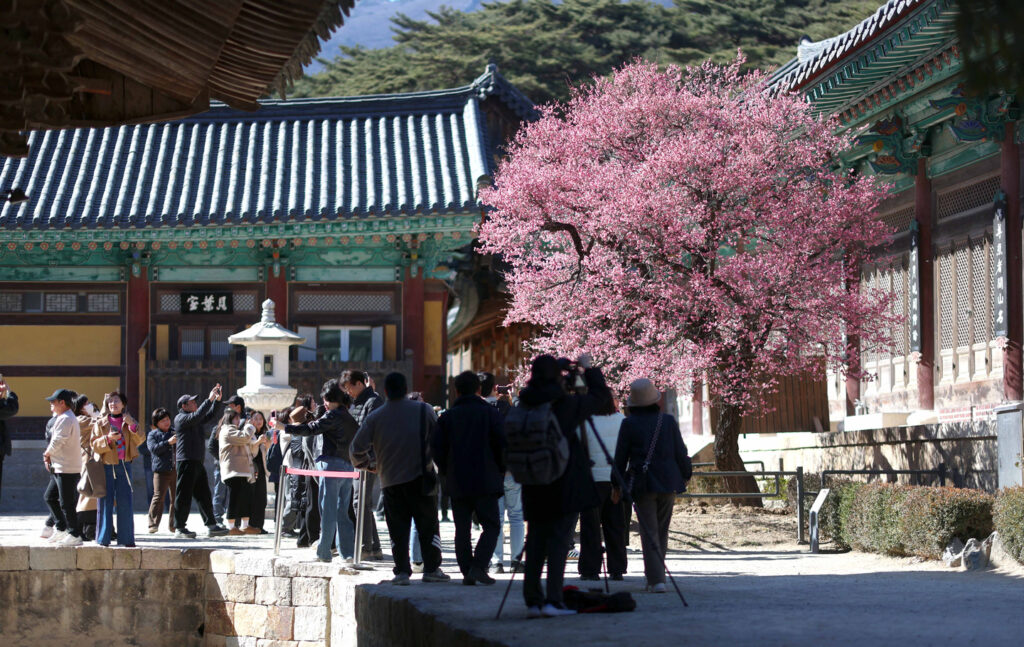
Insadong (Line 3, Anguk Station, exit 6) is where you go to buy hanji paper, eat hotteok at the outdoor stalls on a cold morning, and walk through Bukchon on the way back. It’s not really a neighborhood to stay in — accommodation options are limited and skew toward small guesthouses — but travelers who do base themselves here tend to love the 7am quiet before day-trippers arrive from the bigger hotels.
The area runs roughly between Anguk and Jonggak stations. Ssamziegil, the courtyard shopping complex off the main street, is worth 30 minutes of your time even if you don’t buy anything — the building design alone is clever. Morning is when Insadong earns its reputation; by 2pm on weekends it’s shoulder-to-shoulder, and the souvenir quality drops the closer you get to the main drag. Walk a block east toward Ikseon-dong alley instead — the cafe density is high, the crowds are thinner, and the hanok architecture is intact.
Practical Information
- Getting there: All four areas are on the Seoul Metro. Hongdae: Line 2/AREX Hongik University Station. Itaewon: Line 6 Itaewon Station. Gangnam: Line 2 Gangnam Station. Insadong: Line 3 Anguk Station.
- Hours: Neighborhoods don’t close, but Insadong shops typically open 10am–8pm; Hongdae bars run until 4–5am weekends.
- Cost: Budget meals ₩7,000–12,000 ($5–9) in Hongdae/Insadong; add 30–50% in Gangnam. Guesthouse beds from ₩35,000 ($26); mid-range hotels ₩120,000–200,000 ($89–148) across all four areas depending on season.
- Best time: Insadong and Hongdae are best on weekday mornings. Itaewon’s Noksapyeong end peaks pleasantly on Saturday afternoons. Gangnam is least affected by tourist seasonality.
- Insider tip: The subway line that connects everything most efficiently is Line 2 (the green circle line) — Hongdae, Kondae, Sindorim, and dozens of transfer points sit on it. Prioritize a hotel within a 10-minute walk of a Line 2 station over any neighborhood brand.
Pick Hongdae if this is your first Seoul trip and you want one honest answer — the airport access, food price point, and central subway position solve more problems than any other single neighborhood choice.